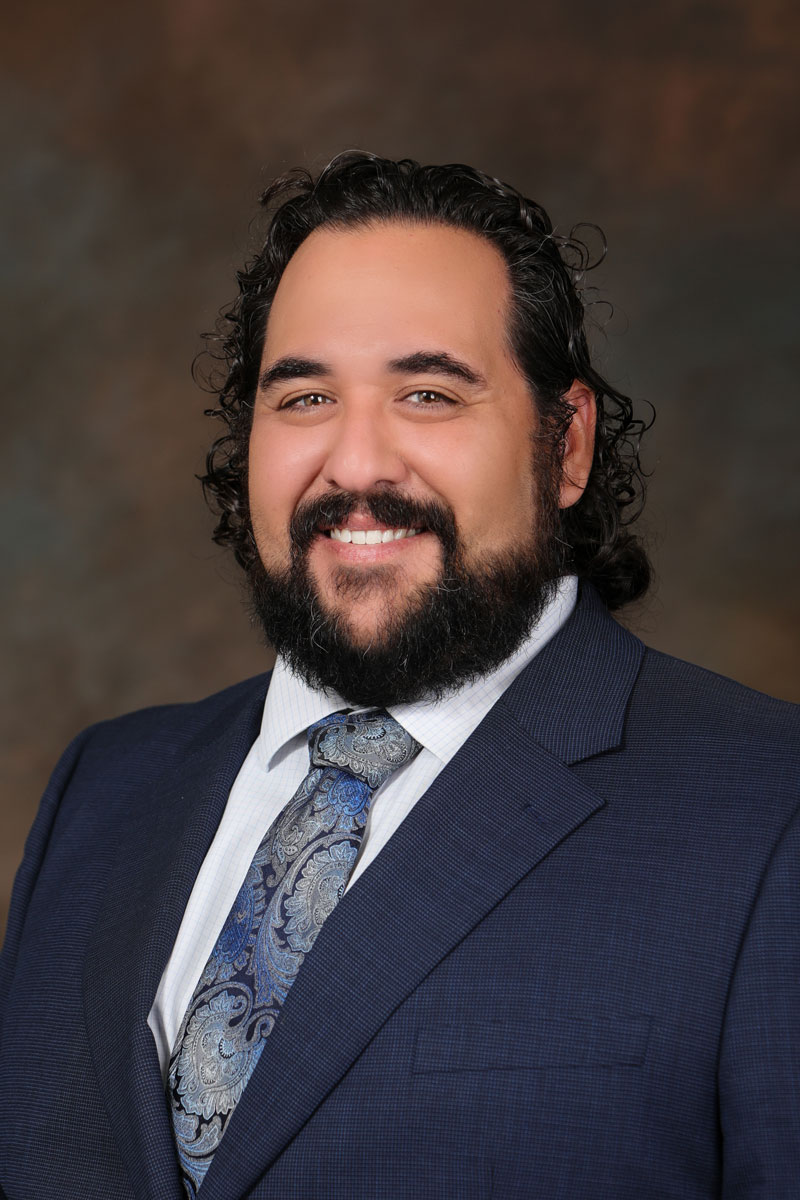
KINGSVILLE (Nov. 11, 2026) — — With a unique background in teaching and research, Dr. Robert Ayala built his way up to his official role of Vice President for Student Success with the mission to serve the students that are enrolled at Texas A&M University-Kingsville (TAMUK).
Ayala shared not only his aspirations for this new role, but inspiration and interests in the community that it serves, despite coming from a career background that does not traditionally specialize in serving students from each orientation unlike other leadership roles.
However, his desire to help students from every walk of life to pursue higher education and eventual success shined through and resulted from his own experience with a research background.
“I was on the research side of higher education engaging as a research assistant, and then eventually got my PhD and began the traditional teaching and research,’ Ayala said. “It was through that experience of teaching undergraduate and graduate courses that I really started to dive into what exactly helps students succeed and persist. Everybody that comes to college aspires to finish getting a degree, so what are the factors that influence persistence? I was fortunate enough in my career to write a few grants merging what I had dabbled in in terms of scientific research and then moving that over into what are the factors that influence or variables that impact success for students. Doing that opened the door to the student success/engagement side of the house which helped how I operated in academics where we don’t have a whole lot of experience and training using the student success lens.”
He addressed the challenges he will face in his new role, which ranged from overseeing unknown areas such as housing, to acclimating his department to a recent reorganization after Student Affairs and Academic Success merged to create Student Success.
Another major challenge addressed was building off the university’s recent retention milestone.
“Over the last couple of years in my time here we have raised retention rates of FTICs 12 points,” Ayala said. “That’s amazing and almost unheard-of work. The work to do now is to be relentless and raise that rate more; going from 75 points to 77 points is going to be harder.
Embedded in those two points are all those strategies and action levers that we’re going to take into account. That’s going to be the challenge. How do we operationalize that and execute those strategies? We know what we have to do, but how we get that running is the real work.”
With the aspiration to not only serve the student body, but to incorporate them into all of the future decision-making, Ayala is presented with a unique opportunity. His division impacts every aspect of students regardless of who they are.
These facts combined with his respect for the university’s 100 years of diligent work to provide these higher education opportunities to South Texas residents and others are all part of his desire to continue moving the university forward.
“So, developing appropriate strategies, budgets, interventions and all those things that are going to move the needle for retention, persistence and graduation are three aspects that really speak to my heart and what I love to do,” Ayala said. “I love to do it for the students and university we serve. TAMUK is unique in that we have students that have graduated as valedictorians, and we have students that are not TSI-complete.”
“The fact that we have been providing access to higher education in South Texas for a hundred years is a unique mission and intriguing mission for me,” Ayala added. “I’m excited to engage in that work. I think that’s really what I’m most aspirational about is serving our students and developing and implementing the most effective momentum strategies for those that are least likely to complete.”